
Coriander
Description Of
Coriander
| Specification | Details |
|---|---|
| Nutrients (per 100g) | |
| Calories | 3.68 kcal |
| Carbohydrate | 0.587 g |
| Protein | 0.341 g |
| Vitamins | Vitamin A, Vitamin C, Vitamin K |
| Minerals | Folate, Potassium, Manganese, Choline, Beta-carotene, Beta-cryptoxanthin, Lutein, Zeaxanthin |
| Fat | Not specified |
Description
Coriander Seeds
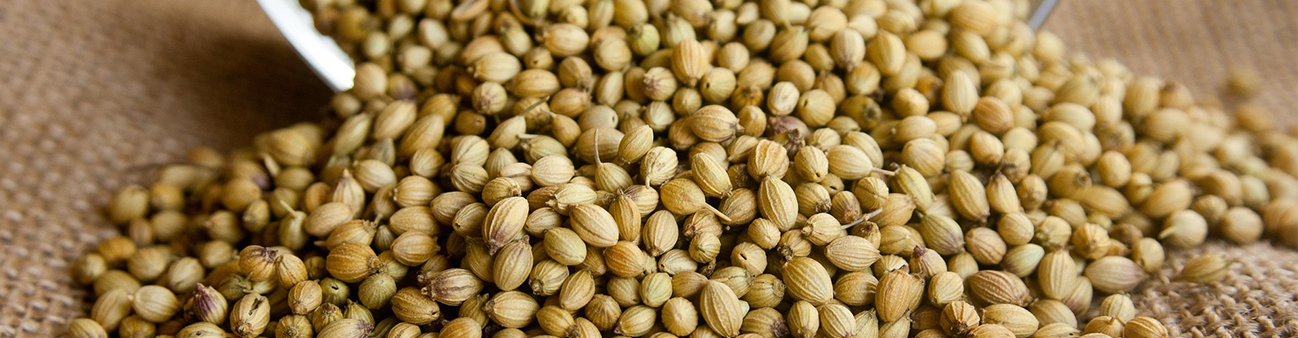
Plump, brown coriander seeds, prized for their aromatic essential oils that enhance dish flavors, are a significant export from India. Indian exporters play a key role in the global market, shipping large quantities annually to fulfill demand from around the world. This lucrative export opportunity not only offers Indian vendors and farmers chance to expand internationally but also strengthens India's influence on global spice trade. Indian exporters provide an assortment of coriander seed varieties suited to various international cuisines and palates in order to satisfy expanding worldwide craving for flavorful spices. With the sustained climb in global appetite for spices that enliven meals, coriander seeds remain a highly valued commodity on international markets, cementing their importance in spice trade development for years ahead.
Coriander Seeds Varieties
Coriander seeds cultivated across India's fertile farms encompass diverse cultivars renowned globally for exceptional taste and nutrition. Top producers adeptly grow premium varieties like Sadhana, Sindhu, and Sudha to satisfy international desire for quality spices. India's mastery of coriander cultivation and commitment to meeting worldwide need with excellence shine through in the assortment available. Whether your purpose is seasoning succulent dishes or producing products at scale, India's coriander seeds offer an unrivaled blend of flavors and options.
Sadhana (CS-4)
The Sadhana variety thrives as a multifaceted plant optimized for grain or leaf use through its bushy habit. It takes kindly to moisture-holding dark soils and resists pests, delivering robust returns. Yielding 1000 to 1100 kg per hectare, Sadhana pairs resilience with high productivity—ideal traits for farmers. This cultivar stands apart through adaptability and quality, making it a savvy selection for coriander fields.
Sindhu (CS-2)
Maturing within 95-100 days, Sindhu cultivates as a medium-duration plant generating medium-sized grains. It provides around 1050 kg per hectare reliably. Known for consistency in traits like taste, Sindhu satisfies global criteria with precision. Thanks to ideal growing conditions and solid yield, it proves a stellar choice whether serving homegrown needs or trade abroad
Sudha (LCC-128)
The Sudha variety produces a medium-duration plant that typically matures within 80 to 98 days. Its grains have an elongated oval shape and medium size. Yields can reach between 750 to 1200 kilograms per hectare. With an essential oil content ranging from 0.36 to 0.40 percent, Sudha offers a rich aromatic flavor enhancing its commercial appeal. This variety combines high productivity with valuable oil concentration, providing benefits for both culinary and market uses.
Swathi (CS-6)
The Swathi variety cultivates a short-duration plant maturing in a brisk 80 to 85 days. It displays notable resistance to powdery mildew, fostering healthier crops. Yields approach around 900 kilograms per hectare, distinguishing Swathi for its robust performance. Its rapid growth and disease resistance make it an ideal choice for export activities by amalgamating dependability with premium production adhering to international standards. This variety presents a trustworthy option for growers prioritizing both efficiency and salable quality.
APHU Dhania-1 (LCC-170)
The APHU Dhania-1 variety cultivates a medium-duration plant, maturing within 85 to 90 days. Its bold oblong grains have a productive capacity ranging from 850 to 1200 kilograms per hectare. Renowned for its high essential oil content averaging approximately 0.40 percent, APHU Dhania-1 delivers rich aromatic flavor. This variety combines impressive yields with concentrated oil levels, making it an excellent choice for both premium production and overseas opportunities.
Suguna (LCC-236)
The Sugana cultivar of coriander seeds is a medium-duration variety that matures within 90-95 days. Its slender oval grains are impressively productive, yielding between 750-1350 kilograms per hectare. Sugana stands out for its high volatile oil content averaging approximately 0.52%, enhancing its aromatic profile and flavor. With both a sizable harvest and rich oil content, Sugana is perfect for premium spice cultivation and export markets, ensuring exceptional quality and value.
Suruchi (LCC-234)
Suruchi coriander is renowned for high productivity and off-season suitability. Harvesting occurs 35 to 55 days following planting. In the rabi season, it yields around 15-18 tons per hectare of grains while under 50% shade netting in off-season it produces 2.5-4.5 tons per hectare of greens. Excelling at grain and leaf generation, this cultivar maximizes output and quality throughout the year.
Susthira (LCC-219)
The Susthira coriander seed variety is a high-yielding medium-duration plant known for stability in rain-fed areas. It offers a yield potential of 12.0 to 14.3 quintals per hectare without irrigation and 12.0 to 17.5 quintals with watering. With such versatility and consistency, Susthira is perfect for diverse environments, guaranteeing reliable harvests and quality across different conditions.
A vibrant golden-yellow powder derived from Curcuma longa's dried roots, Turmeric originates from South Asia and Southeastern regions where the perennial flourishes with its rhizomes in climates of balmy rain—temperatures between twenty to thirty degrees. Its annual harvest extracts fresh rhizomes or subjects them to boiling and drying processes prior to grinding. Renowned for its unmistakable radiance and savor, with origins deeply woven into cultural histories, Turmeric has evolved into a universal ingredient endowed with medicinal virtues as well as a treasured spice sprinkled liberally across global cuisines, admired alike for gifts of nutrition and gustatory delight.
Uses & Benefits
Coriander's antioxidant compounds, including geraniol and linalool, impart medicinal qualities. Lab experiments show coriander activates enzymes aiding blood sugar regulation, though those with low levels must use cautiously to prevent problems. Its effects are strong.
Coriander bulges with antioxidants conferring a range of advantages, including bolstered immunity, potential cancer prevention, reduced inflammation, and neuroprotection. This potent herb not only enhances flavor but meaningfully contributes to wellness.
Research indicates coriander supports heart health by lowering blood pressure and "bad" LDL cholesterol while elevating "good" HDL cholesterol. Incorporating coriander into one's diet naturally aids cardiovascular function and promotes prosperity.
Studies hint coriander's antioxidants may mitigate brain inflammation, enhance memory retention, and relieve anxiety symptoms. However, more investigation is necessary to fully grasp coriander's probable impact on neurological health.
